Can You Get Homeowners Insurance with a 20-Year-Old Roof? (Yes, and Here's How)

You've been a responsible homeowner for two decades. You've maintained your property, paid your premiums on time, and never filed a frivolous claim.
But now your roof is 20 years old, and suddenly getting homeowners insurance feels like an uphill battle.
Here's the good news: Yes, you can absolutely get coverage with an older roof. You just need to know how the game works, and which carriers are willing to play ball.
Why Insurance Companies Get Nervous About Older Roofs
Let's be honest about what's happening behind the scenes.
Insurance carriers aren't trying to ruin your day. They're looking at risk through a very specific lens, and a 20-year-old roof sets off some alarm bells in their underwriting systems.
Here's what they're worried about:
✔ Increased risk of leaks and water damage
An older roof means more potential for water infiltration, which can lead to expensive claims involving mold, structural damage, and interior repairs.
✔ Storm vulnerability
Aging shingles don't handle high winds, hail, or heavy snow loads as well as newer materials. That means higher claim frequency during severe weather events.
✔ Depreciation and replacement costs
Carriers know that if your roof fails, they're likely on the hook for a full replacement, not just a patch job.
✔ Unpredictable lifespan
A roof that's hit its 20-year mark could last another five years, or it could fail next month. That uncertainty makes underwriters uncomfortable.
The truth? It's not personal. It's actuarial.
But that doesn't mean you're stuck without options.
The RCV vs. ACV Conversation You Need to Understand
Here's where things get interesting, and where many homeowners get caught off guard.
When your roof is older, insurance companies start talking about Actual Cash Value (ACV) instead of Replacement Cost Value (RCV). Understanding this difference can save you thousands of dollars in frustration.
Replacement Cost Value (RCV)
This is the gold standard. If your roof gets damaged, the insurance company pays to replace it with new materials, no depreciation applied.
You get a brand-new roof, regardless of how old your previous one was. This is what you want.
Actual Cash Value (ACV)
This is where depreciation enters the picture. If your 20-year-old roof gets damaged, the carrier calculates what it's worth today, factoring in age and wear.
So if your roof was worth $15,000 new but is now 20 years old, you might only get $5,000 or $6,000 after depreciation. You're left covering the gap out of pocket.
Here's the critical question: Does your policy cover your roof at RCV or ACV?
Many carriers automatically switch older roofs to ACV coverage, sometimes without homeowners realizing it. That's a massive difference in protection, and it's buried in the fine print.
When you're shopping for coverage with an older roof, this is one of the first things you need to clarify.
The Power of a Professional Roof Inspection

Want to turn the tables in your favor? Get a professional roof inspection or roof certification.
This is your secret weapon.
A certified inspection from a licensed contractor, engineer, or home inspector can prove that your roof, despite its age, is still in solid condition. Many carriers will work with you if you can provide documentation showing:
✔ No missing or damaged shingles
✔ Structurally sound decking and support
✔ Proper ventilation and flashing
✔ No signs of leaks or water damage
✔ Remaining useful life of at least 3-5 years
Some insurance companies will even require this inspection before they'll issue a policy. But here's the flip side: if your roof passes, it opens doors with carriers who might have otherwise turned you down.
Think of it as giving your roof a clean bill of health. It costs a few hundred dollars upfront, but it can save you thousands in premium increases or denial headaches.
Why Working with an Independent Agency Changes Everything
Here's where the real advantage kicks in.
If you call a single insurance carrier directly and they say "sorry, we don't cover roofs over 15 years old," you're stuck. Game over.
But when you work with an independent agency like Midwest Insurance Professionals, LLC, you're not limited to one carrier's rules. We have access to multiple insurance companies: some of which are far more flexible with older roofs than others.
That means:
✔ We can shop your coverage across carriers who specialize in older homes
✔ We know which underwriters will accept a roof certification and which won't
✔ We can compare RCV vs. ACV options to find the best protection for your situation
✔ We can bundle your home, auto, and umbrella policies for maximum savings
You're not fighting this battle alone. We've done this hundreds of times, and we know exactly which carriers will work with you: and which ones will waste your time.
This is the difference between getting declined and getting covered.
Simple Steps to Make Your Roof More Insurable
You don't need to replace your entire roof tomorrow. But you can take some smart, proactive steps to make your home more attractive to insurance carriers.
1. Clean Your Gutters Regularly
Clogged gutters lead to water backup, which causes roof damage over time. Keep them clear, and you'll extend your roof's lifespan.
2. Check for Missing or Damaged Shingles
Walk around your property after a storm and look for shingles in your yard. Replace damaged ones immediately: small fixes prevent big claims.
3. Address Moss or Algae Growth
That green stuff isn't just ugly: it traps moisture and accelerates shingle deterioration. Clean it off or hire a professional to do it safely.
4. Keep Records of All Repairs
Did you replace flashing around your chimney? Patch a section after a storm? Keep receipts and photos. This documentation proves you've been maintaining your roof, which carriers love to see.
5. Consider a Partial Roof Replacement
If only one section of your roof is showing wear, replacing that area can buy you time and make your home more insurable without breaking the bank.
These aren't expensive fixes. But they signal to underwriters that you're a responsible homeowner who takes maintenance seriously.
What Happens If You Can't Get Traditional Coverage?
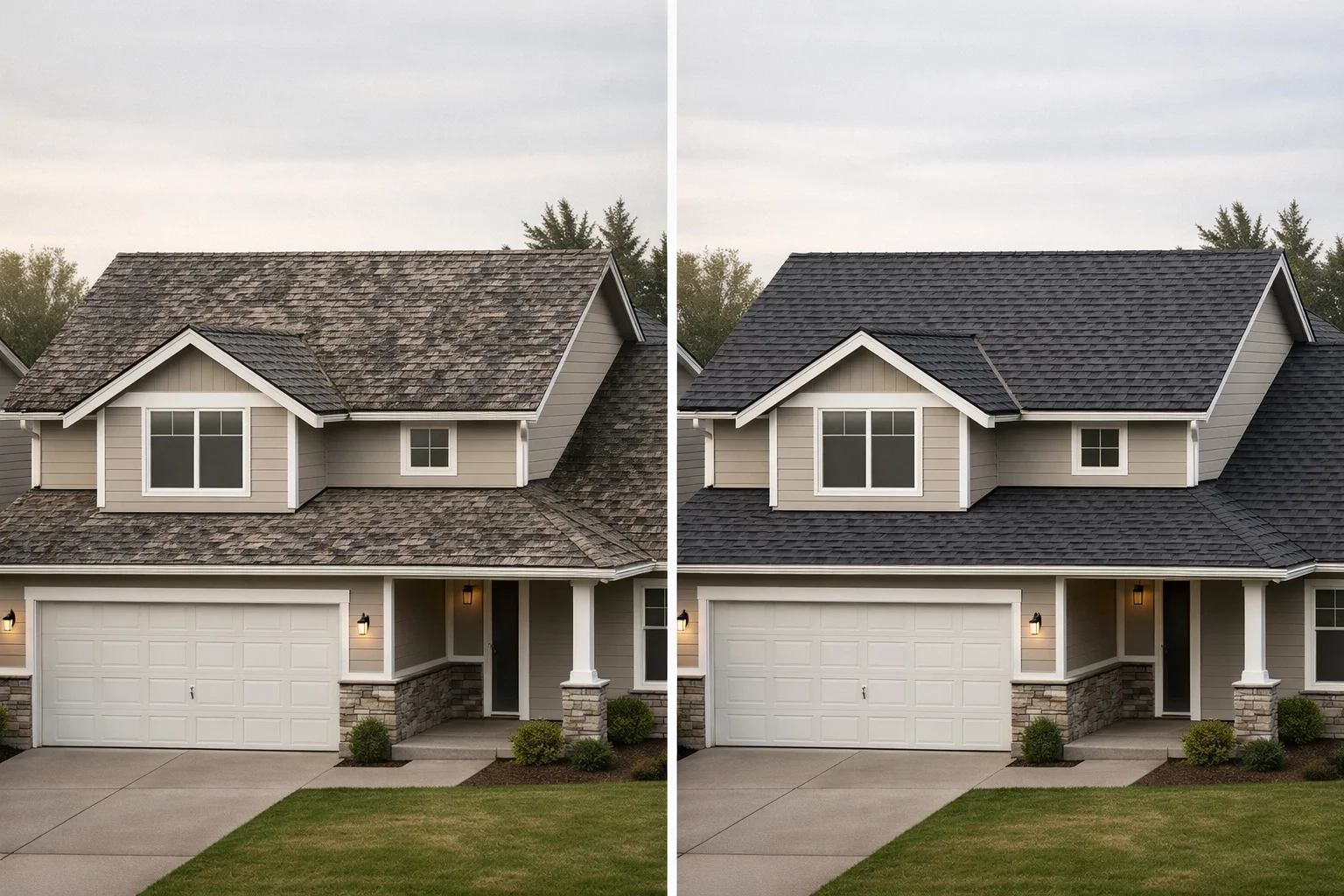
Let's say you've explored your options and traditional carriers still won't budge. You're not out of luck.
Some states offer state-sponsored insurance programs or "insurers of last resort" designed to cover homes that traditional carriers won't touch. These aren't always the cheapest option, but they keep you legally covered while you work on making improvements.
Additionally, some surplus lines carriers specialize in harder-to-insure properties. They're more expensive, but they exist precisely for situations like yours.
The goal is to get coverage now: even if it's not perfect: then work on upgrading your roof so you can transition back to a traditional carrier with better rates.
The Bottom Line: You Have Options
Getting homeowners insurance with a 20-year-old roof isn't impossible. It just requires strategy.
You need to understand how carriers evaluate risk, know the difference between RCV and ACV coverage, and work with professionals who can open doors instead of closing them.
Here's your action plan:
✔ Get a professional roof inspection to document its condition
✔ Ask about RCV vs. ACV coverage before you sign anything
✔ Work with an independent agency that has access to multiple carriers
✔ Take simple maintenance steps to extend your roof's life
✔ Keep records of all repairs and improvements
You've protected your home for 20 years. We'll help you protect it for the next 20.
If you're struggling to find coverage or just want to explore your options, reach out to us at Midwest Insurance Professionals, LLC. We'll shop your coverage across carriers who understand that a well-maintained older roof isn't a dealbreaker( it's just part of your home's story.)
