

The 'New Driver' Survival Guide: How to Add Your Teen to Your Auto Insurance (Without Selling a Kidney)

You've survived the learner's permit phase. You've white-knuckled it through hours of parallel parking practice in grocery store parking lots. Your teen finally passed the driving test.
And now? Now comes the fun part: adding them to your auto insurance policy.
Let's not sugarcoat it. When you call your insurance company and ask what it'll cost to add your newly licensed 16-year-old, the number they quote back might make you wonder if you accidentally asked for coverage on a Ferrari instead of your 2015 Honda Civic.
The average cost to add a teen driver? Around $3,225 per year. That's roughly $268 per month. Some families see their monthly premiums jump from $200 to $678 overnight.
Before you start researching kidney donation procedures, take a breath. There are real, practical strategies that can significantly reduce that sticker shock, and we're going to walk through all of them.
Why Does Adding a Teen Cost So Much, Anyway?
Your teen is probably a great kid. Honor roll, volunteers at the animal shelter, never misses curfew.
None of that matters to insurance companies.
Here's what does matter: Drivers ages 16-19 are involved in fatal car crashes nearly three times as often as adult drivers on a per-mile basis. They have zero driving history. No track record of safe driving. No claims history to review.
Insurance companies look at group statistics, and those statistics aren't pretty. A new teen driver costs more to insure than a driver with a speeding ticket, sometimes $450 more per year. They even cost more than drivers with at-fault accidents on their record.
It's not personal. It's just math.
The good news? You have way more control over this cost than you think.
Strategy #1: The Good Student Discount (Yes, Grades Actually Matter Now)
Remember when your teen asked why algebra mattered in real life? Here's your answer.
Most insurance carriers offer a "Good Student Discount" for teens who maintain a B average or higher. Some require a 3.0 GPA. Others want to see your kid on the honor roll.
The discount typically ranges from 10% to 25% off the teen driver premium. On a $3,200 annual increase, that's $320 to $800 back in your pocket.
Here's what you'll need:
✔ A copy of your teen's report card or transcript
✔ Proof of honor roll status (if required)
✔ Sometimes a letter from the school registrar
Pro tip: Ask your carrier if the discount continues through college. Many extend it to full-time students under 25 who maintain good grades. That means four more years of savings while your kid is away at school.
Suddenly, those late-night study sessions have a pretty solid ROI.
Strategy #2: Defensive Driving & Driver's Ed (The Weekend That Pays for Itself)

Your state probably required some form of driver's education before your teen could get their license. Good start.
But here's the thing: completing an approved defensive driving course or driver's ed program can earn you an additional discount on top of everything else.
These courses teach teens:
✔ How to identify and respond to road hazards
✔ Proper following distances and speed management
✔ What to do in adverse weather conditions
✔ The real consequences of distracted driving
Most carriers recognize courses from organizations like the National Safety Council or state-approved programs. The discount typically ranges from 5% to 15%.
Is it worth giving up a Saturday? When it could save you $200+ per year and actually make your kid a safer driver? Absolutely.
Some insurance companies even offer their own online defensive driving courses. Check with your carrier, you might be able to knock this out in a few hours from your couch.
Strategy #3: The Clunker Advantage (Why a Boring Sedan is Your Best Friend)
Let's talk about the car.
Your teen is probably lobbying hard for something cool. Something fast. Maybe something with a turbocharger and a spoiler.
Here's what you need to know: the vehicle you assign your teen to makes a massive difference in your premium.
Insurance companies calculate rates based on the car's:
✔ Replacement cost
✔ Repair costs
✔ Safety ratings
✔ Theft likelihood
✔ Performance capabilities
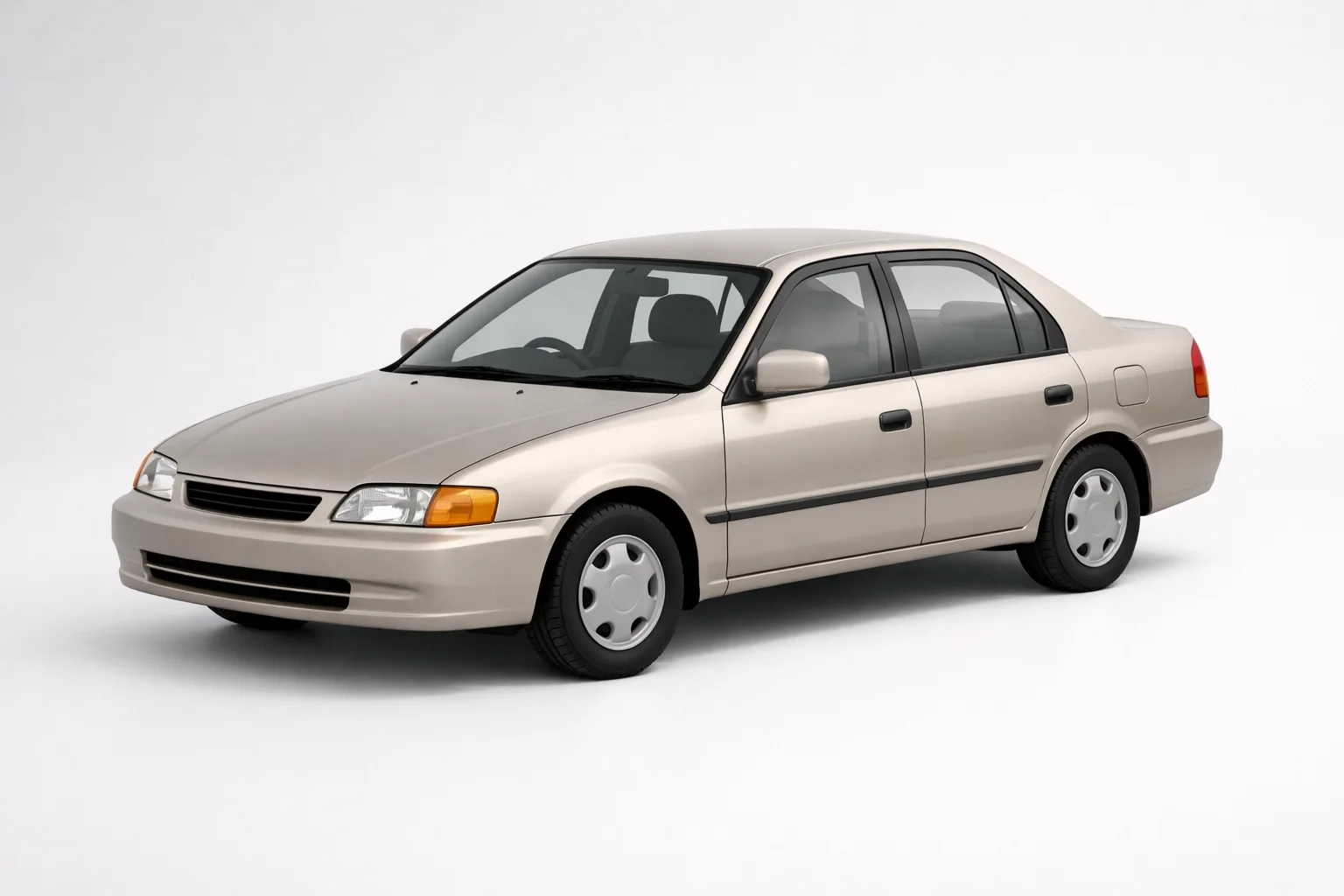
A brand-new sports car? That's going to hurt. A 10-year-old sedan with good safety ratings and low repair costs? That's your golden ticket.
Assign your teen to the least expensive vehicle in your household. If you have a 2014 Toyota Camry and a 2023 BMW X5, put your teen on the Camry. The premium difference could be $1,000+ per year.
Yes, your teen will complain that the car is "boring" or "doesn't even have Bluetooth." Remind them that boring saves money: money that could go toward college, or gas, or literally anything else.
Plus, there's something to be said for learning to drive in a car that won't do 0-60 in 4.2 seconds.
Strategy #4: Telematics & Usage-Based Insurance (Big Brother, But Make It Save You Money)
Here's where technology becomes your ally.
Telematics programs: also called usage-based insurance: track your teen's driving behavior through a smartphone app or plug-in device. They monitor things like:
✔ Hard braking and rapid acceleration
✔ Speeding and excessive speeds
✔ Time of day driving (late-night driving is riskier)
✔ Phone usage while driving
✔ Mileage and total trip duration
If your teen drives safely, you earn discounts. Some programs offer up to 30% off based on good driving behavior.
Popular programs include:
State Farm's Drive Safe & Save
Progressive's Snapshot
Allstate's Drivewise
Nationwide's SmartRide
Is this invasive? Maybe a little. But it's also incredibly effective at encouraging safe driving habits. Your teen knows they're being monitored. That awareness alone can reduce risky behavior.
Plus, you get peace of mind. You can see exactly how your kid is driving when you're not in the passenger seat clutching the door handle.
Think of it as a safety tool that happens to save you money.
The Independent Agency Advantage: Why Shopping Around Actually Matters
Here's something most parents don't realize: teen driver rates vary wildly between insurance companies.
For the exact same teen, with the same car, in the same zip code:
Erie might charge $2,532 per year
State Farm might charge $5,176 per year
That's a $2,644 difference. For identical coverage.
If you're working with a single-carrier agent (someone who only sells one company's products), you're stuck with whatever that one carrier charges for teen drivers.
This is where working with an independent agency like Midwest Insurance Professionals, LLC makes all the difference.
We represent multiple carriers. We can shop your teen driver situation across 10+ insurance companies and find the one that doesn't penalize you as much for adding a young driver.
One carrier might specialize in good student discounts. Another might have better telematics programs. A third might just price teen drivers more competitively across the board.
We do the heavy lifting. You get the savings.
Quick Action Steps Before Your Teen Gets Their License
Don't wait until the day your teen passes their driving test to think about insurance. Get ahead of this.
Here's your game plan:
90 Days Before the Test:
✔ Contact Midwest Insurance Professionals, LLC for quotes from multiple carriers
✔ Compare how different companies handle teen drivers
✔ Ask about all available discounts (good student, defensive driving, telematics)
30 Days Before the Test:
✔ Enroll your teen in a defensive driving course
✔ Gather report cards or transcripts for good student discount
✔ Decide which vehicle in your household your teen will drive
The Day They Get Their License:
✔ Call us immediately to add your teen to the policy
✔ Set up telematics if you're using a usage-based program
✔ Review your new premium and coverage details
Your teen gets coverage the same day you notify your insurance company. Don't drive anywhere until that call is made.
The Bottom Line: It Doesn't Have to Break the Bank
Adding a teen driver to your auto insurance is expensive. There's no getting around that fundamental reality.
But it doesn't have to be catastrophically expensive.
With the right combination of discounts: good student, defensive driving, safe vehicle assignment, telematics, and carrier shopping: many families reduce their teen driver costs by 30% to 50%.
That $3,200 annual increase? With some strategic planning, you might get it down to $1,600 or even $1,200.
You've already taught your teen to drive. Now teach them that insurance decisions matter. Show them how their grades, their driving behavior, and the car they drive all affect real-world costs.
Ready to add your teen driver without the financial panic attack? Contact Midwest Insurance Professionals, LLC before your teen gets their license. We'll shop multiple carriers, identify every available discount, and find you the most competitive rate for your situation.
Because your teen getting their license should be exciting: not financially terrifying.
Let's make this manageable. Reach out to us today.
