

The HOA Deductible Trap: Why a Water Leak in Your Neighbor's Unit Could Hit YOUR Wallet

You've protected your condo or townhome. You carry insurance. Your HOA carries insurance, too.
So what happens when a dishwasher line bursts in your neighbor's unit and water damages several homes?
The HOA's master policy may cover the building repairs. But that policy comes with a deductible. If the deductible is $25,000, $50,000, or more, the association may pass that cost to you through a special assessment.
You may receive the bill even if you had nothing to do with the leak.
That is the HOA deductible trap.
The HOA Master Policy May Pay: But You May Still Get the Bill
Your HOA's master policy generally protects the building and common areas. Depending on the policy type, it may cover:
Exterior walls and the roof
Structural framing
Shared plumbing and electrical systems
Hallways, stairways, and lobbies
Common garages and amenities
Some original interior fixtures and finishes
Your individual condo policy, usually an HO-6 policy, protects the parts of your home and finances that the master policy does not.
That typically includes:
Personal belongings
Interior improvements and upgrades
Certain flooring, cabinets, and fixtures
Personal liability
Additional living expenses
Loss assessment coverage
The master policy and your HO-6 policy work together. Neither one replaces the other.
For more on this relationship, read Townhome & Condo Insurance: What Your HOA's Master Policy Doesn't Cover.
How the Trap Works: A $25,000 Water Leak Scenario
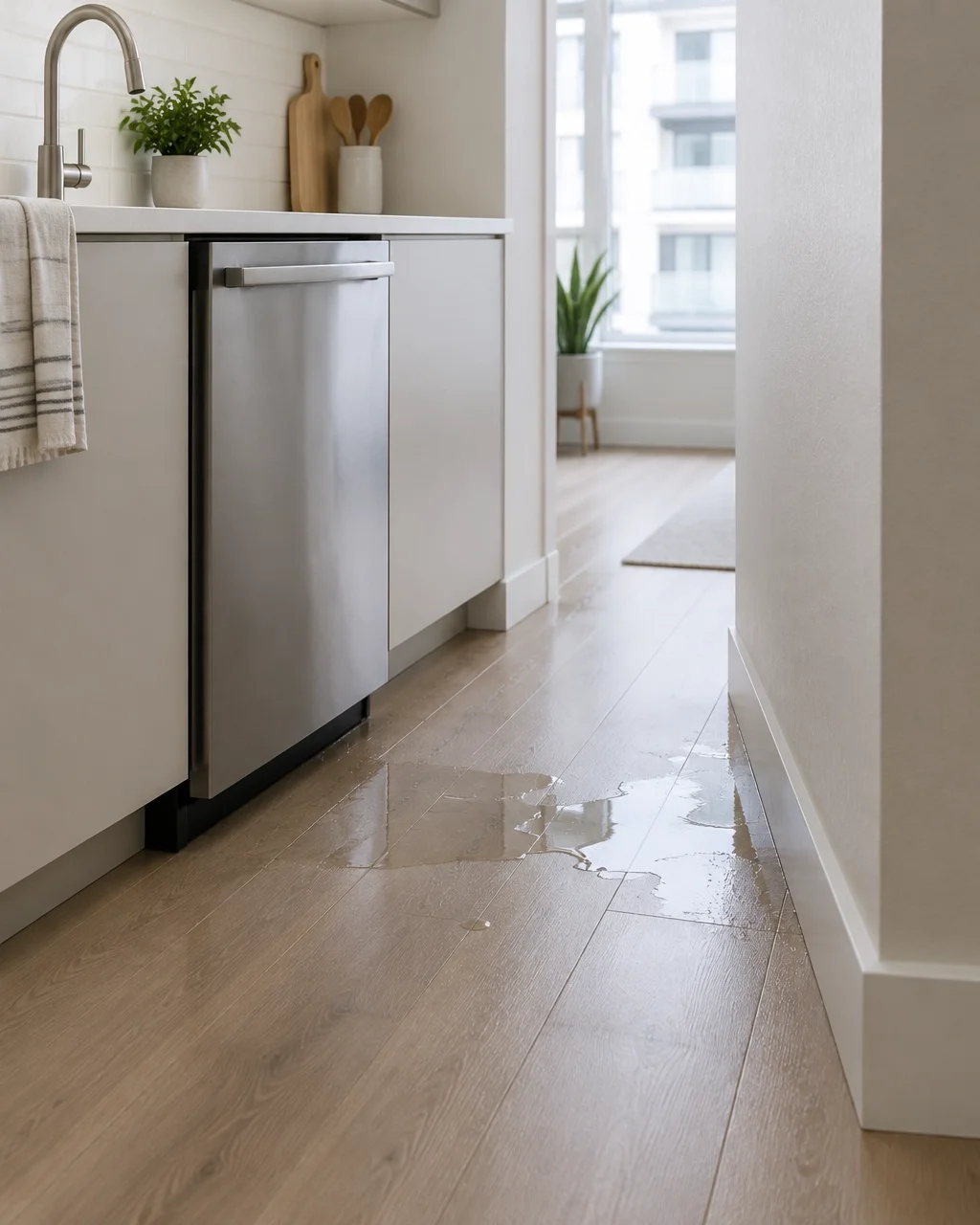
Imagine a dishwasher supply line bursts in a neighboring unit.
Water travels through the walls and floors. It damages your unit, the neighbor's unit, and several units below. It also damages shared building materials, including drywall, framing, and common plumbing.
The HOA files a claim under its master policy.
The master policy covers the building repairs, but the building has a $25,000 water damage deductible. Under the association's documents, that deductible is divided among the owners. Your share comes to $3,000 or more.
The HOA sends you a special assessment.
Your HO-6 policy includes the default $1,000 loss assessment limit. Your policy may pay up to that amount, assuming the assessment qualifies under your policy wording.
You still owe the remaining $2,000 or more.
You did not cause the leak. You were not negligent. You may not even have been home when the loss occurred.
But the deductible can still reach your mailbox.
Why Master Policy Deductibles Are So High
Insurance carriers have raised premiums and deductibles for many condo and townhome associations. Higher deductibles help carriers control claim costs and keep master policies available in difficult insurance markets.
Some associations now carry deductibles of:
$10,000 to $25,000 for water damage
$25,000 to $50,000 or more for major property claims
1% to 2% of the building's insured value for wind or hail losses
The larger the building, the more significant a percentage-based deductible can become.
For example, a 1% deductible on a building insured for $5 million equals $50,000. A 2% deductible equals $100,000.
That cost does not always stay with the association. Your governing documents may allow the HOA to assess owners for part or all of the deductible.
The bigger the master deductible, the bigger your potential personal assessment.
Who Pays the Deductible?
Your HOA's declaration, bylaws, and state law determine how the deductible is allocated. The rules vary by association.
Your HOA may:
Divide the deductible among all unit owners
Allocate costs according to each owner's percentage interest
Charge the deductible to the unit where the loss originated
Charge the entire deductible to one owner if negligence is established
Apply a combination of these approaches
If the leak starts in your unit, the financial exposure may be even greater. A failed washing machine hose, overflowing tub, or neglected plumbing problem could damage multiple units and common areas.
In that situation, the association may seek reimbursement from you. Your personal liability coverage may become relevant, but liability coverage and loss assessment coverage are not the same thing.
You need to understand both.
What Loss Assessment Coverage Actually Does
Loss assessment coverage can help pay your share of a qualifying assessment issued by your HOA or condominium association.
Depending on the policy, it may respond to an assessment connected to:
A covered fire
Covered water damage
Wind or hail damage
A covered loss to common property
Certain liability claims against the association
A covered master policy deductible
But loss assessment coverage is not a general fund for every HOA expense.
It generally does not cover:
Routine maintenance
Capital improvements
Roof replacement planned before a loss
Reserve fund shortfalls
Deferred repairs
Assessments tied to excluded causes of loss
Every assessment simply because the HOA issued it
The underlying event must usually be a covered cause of loss under your policy. The assessment must also be properly imposed under the association's documents and applicable law.
That distinction matters. Loss assessment coverage cannot turn an uninsured loss into an insured loss.
Watch for the Master Deductible Special Limit
Many condo owners assume their loss assessment limit automatically covers the full master policy deductible.
That assumption can be wrong.
Some HO-6 policies include a separate, smaller limit for assessments involving a master policy deductible. Other policies may restrict or exclude coverage for certain deductible assessments. Some policies may cover only particular causes of loss, such as fire or wind, while excluding water damage assessments.
Read the wording carefully.
Ask these questions:
✔ Does my loss assessment coverage apply to a master policy deductible?
✔ Does it apply when the assessment follows a water leak?
✔ Is there a separate special limit for deductible assessments?
✔ Does the coverage apply if the leak originated in another unit?
✔ Does the coverage apply if the leak originated in my unit?
✔ Is the limit reduced by a deductible or another policy condition?
A policy with $50,000 of general loss assessment coverage may not provide $50,000 for every type of assessment. The specific endorsement and limitations control.
How Much Loss Assessment Coverage Do You Need?
Start with your HOA's master policy declarations.
Find the deductible for:
Water damage
Fire
Wind and hail
Liability claims
Other major covered losses
Then review your HOA documents to learn how that deductible can be allocated.
Your goal is to carry enough loss assessment coverage to address your worst realistic exposure.
For many owners, $1,000 or $2,000 is not enough. You may need:
$25,000 of loss assessment coverage
$50,000 of loss assessment coverage
A higher limit when your bylaws permit a full deductible assessment
A separate loss assessment endorsement with broader wording
Do not choose a limit based only on what appears in the default policy package. Choose it based on your building's actual deductible and allocation rules.
Your HOA Deductible Protection Checklist
You do not need to guess where your risk begins. Take these steps:
1. Request the master policy declarations
Ask your HOA, property manager, or board for the current declarations page. Confirm the deductibles and the type of coverage the master policy provides.
2. Review your declaration and bylaws
Look for language explaining who pays the master deductible after a loss. Check whether the association can charge the deductible to the unit where the damage began.
3. Check your HO-6 policy
Review your loss assessment limit and any special limits or exclusions for master policy deductibles.
4. Ask about covered causes of loss
Confirm whether loss assessment applies to water damage, fire, wind, hail, and liability assessments. Coverage varies by carrier and policy form.
5. Keep your unit maintained
Replace worn appliance hoses. Repair plumbing issues promptly. Maintain tubs, toilets, sinks, and washing machine connections.
Good maintenance cannot prevent every loss. It can help reduce the chance that a claim is attributed to neglect or poor upkeep.
6. Coordinate your coverage with your building
Your personal policy should reflect your actual responsibility for flooring, cabinets, fixtures, improvements, and interior finishes. Your loss assessment limit should reflect the financial exposure created by your HOA's master policy.
Protect Yourself Before the Assessment Arrives
Your HOA's master policy may protect the building. It may repair the walls, shared systems, and common areas after a covered loss.
But the deductible can still become your responsibility.
A water leak in your neighbor's unit can affect your home, your finances, and your insurance coverage. The same is true for a fire in a shared wall or hail damage to the common roof.
Do not wait for a special assessment to discover that your loss assessment limit is too low.
Contact Shady Oak Insurance Agency at 612-361-9717 for a condo policy review. We can help you compare your HO-6 coverage with your HOA's master policy and identify potential gaps in loss assessment protection.
Learn more about Shady Oak Insurance Agency.
Your coverage should match the risks you actually face. Protect what you've built before the next claim tests your policy.
Read more about reviewing your broader personal insurance protection in The 4 Pillars of Personal Insurance.
Insurance coverage varies by policy, carrier, association documents, and state law. This article is for educational purposes only and is not a substitute for reviewing your specific coverage with a licensed insurance professional.
