

Why Cargo Claims Get Denied: 7 Reasons Your Motor Truck Cargo Policy Won't Pay
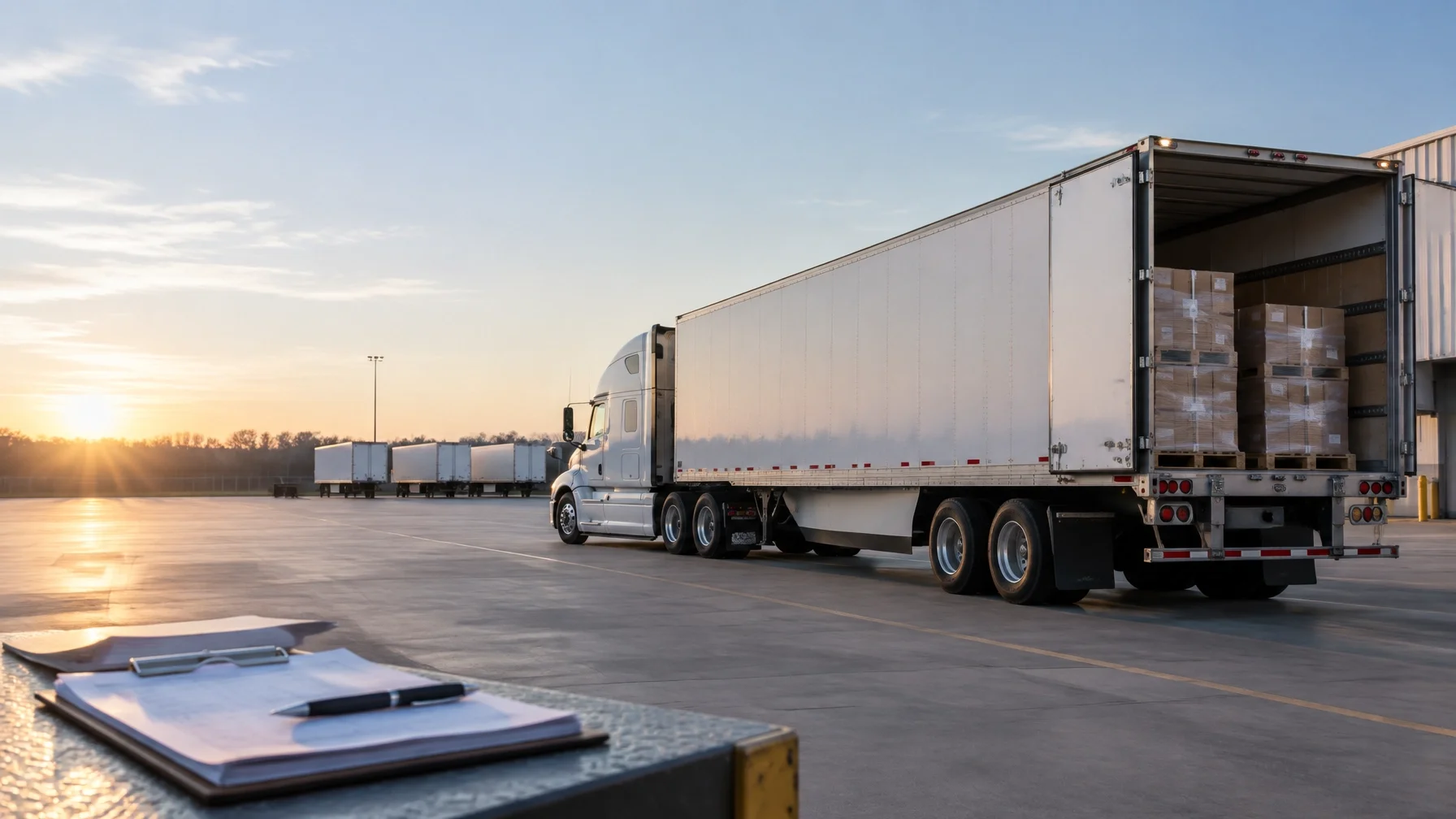
You've paid for motor truck cargo coverage because your customers trust you with valuable freight. You expect the policy to respond when cargo is damaged, stolen, or spoiled.
Sometimes it does.
But a cargo policy is not a blank check. The loss must fit the policy, the cargo must be covered, and your records must support what happened. When one of those pieces is missing, your claim can be delayed, reduced, or denied.
Your cargo policy may have more holes than you realize. Here are seven common denial triggers, and the steps you can take before the next load.
> Important: Cargo coverage varies by insurer, policy form, endorsements, exclusions, and state law. Review your actual policy with your insurance professional before relying on general guidance.
1. Improper Load Securement or Packaging
Cargo claims often become a dispute over how the freight was loaded, packaged, blocked, braced, or tied down.
A policy may expect you to use reasonable care and follow applicable safety standards. It usually does not require perfection. But if the load was visibly unstable, poorly packaged, or inadequately secured, the insurer may argue that the damage resulted from improper handling rather than a covered accident.
Federal cargo securement rules under 49 CFR §§ 393.100–393.136 require cargo to be loaded and secured so it does not leak, spill, blow, fall, or shift in a way that affects vehicle stability or maneuverability.
Real-world scenario:
You pick up boxed equipment marked “shipper load and count.” The shipper loads the trailer, but the pallets are not blocked or braced. During a hard stop, several pallets shift and the equipment is damaged. The shipper says you accepted the load. Your insurer asks why you left without documenting the condition or requesting additional securement.
The claim may become a fight over responsibility.
Protect yourself
✔ Photograph the cargo before the doors close.
✔ Photograph straps, load bars, blocking, bracing, and pallet condition.
✔ Note “shipper loaded” or “driver loaded” accurately.
✔ Record visible packaging or securement concerns on the bill of lading.
✔ Do not leave with a load that creates an obvious safety problem.
If the shipper refuses to correct a serious issue, contact your dispatcher, broker, or agent before departing.
2. No Reefer or Temperature Coverage
Temperature-sensitive freight creates a major coverage gap for many carriers.
A standard cargo policy may not cover spoilage caused by refrigeration failure, temperature deviation, or mechanical breakdown. Many policies require a specific reefer, temperature, or refrigeration endorsement before spoilage coverage applies.
Even when the endorsement is present, the adjuster will look for continuous and reliable temperature records.
Real-world scenario:
You haul a $45,000 produce load. The receiver rejects it because the product arrives warm. Your reefer display shows a normal temperature when you check it, but the unit has no continuous download. The handwritten driver log has several missing hours and contradicts the receiver’s records.
The loss may be real. The claim may still be denied because you cannot establish when the temperature changed or why.
Protect yourself
✔ Confirm your policy includes the correct reefer or temperature endorsement.
✔ Keep continuous temperature logs from pickup through delivery.
✔ Preserve set-point, return-air, supply-air, and alarm records.
✔ Document fuel levels, reefer maintenance, and mechanical warnings.
✔ Record the temperature at pickup and delivery.
✔ Ask the receiver to document the rejection and the reason for it.
Your temperature records need to tell one consistent story. Missing, spotty, or contradictory logs can sink an otherwise valid claim.
For more context on coverage differences, review our guide to trucking insurance in 2026.
3. Unattended Vehicle and Theft Exclusions
A stolen load does not automatically mean a covered cargo claim.
Many cargo policies restrict theft coverage when a truck or trailer is left unattended. The policy may require specific security measures, a secured parking location, locked doors, removed keys, or intact seals.
The adjuster will ask detailed questions:
Where was the truck parked?
How long was it unattended?
Were the doors locked?
Were the keys inside the vehicle?
Was the trailer connected to the tractor?
Was the parking lot fenced, gated, or monitored?
Were the seals intact?
Did the location meet the policy’s definition of a secured area?
Real-world scenario:
You park a loaded trailer overnight in an unsecured lot because the delivery appointment is early the next morning. You lock the tractor, but the trailer has no visible seal. By morning, the cargo is gone. There is no camera footage and no sign of forced entry.
That is a common denial scenario.
Protect yourself
✔ Know exactly what your policy considers a secured location.
✔ Lock all doors and remove the keys.
✔ Use seals when appropriate and record seal numbers.
✔ Avoid isolated or unsecured parking areas.
✔ Take a photo of the truck and trailer after parking.
✔ Preserve surveillance footage and file a police report immediately.
Do not assume that a locked trailer in any parking lot satisfies your policy conditions.
4. Mysterious Disappearance
A load that is simply missing may not meet the policy’s definition of theft.
Mysterious disappearance generally means cargo is gone, but there is no clear evidence explaining how it disappeared. Many policies exclude this type of loss or require stronger proof before theft coverage applies.
Real-world scenario:
You discover that several cartons are missing at delivery. There is no damaged lock, no broken seal, no witness, and no clear point where the shortage occurred. The paperwork shows conflicting carton counts at pickup and delivery.
The insurer may question whether the cargo was ever loaded, whether it was misplaced, or whether the shortage happened after delivery.
Protect yourself
✔ Count or verify the cargo at pickup when possible.
✔ Photograph seals, locks, doors, and the full load.
✔ Record seal numbers on the BOL and delivery documents.
✔ Report suspected theft to law enforcement immediately.
✔ Preserve video, GPS information, ELD data, and dispatch messages.
✔ Do not alter or discard damaged locks, seals, or trailer hardware.
A police report does not guarantee coverage. But prompt reporting and preserved evidence give your claim a much stronger foundation.
5. The Loss Happened Outside Your Custody Window
Your motor truck cargo policy generally applies while the freight is in your covered custody or transit.
That usually means the coverage clock starts when you take possession at pickup and ends when the cargo is delivered. Damage before pickup or after delivery may fall outside your cargo policy.
The bill of lading, pickup timestamp, delivery timestamp, and signed proof of delivery often decide the dispute.
Real-world scenario:
A receiver reports crushed cartons two days after signing a clean delivery receipt. You did not photograph the cargo at delivery, and there is no exception notation. The insurer may argue the freight was delivered without visible damage and that the loss occurred after your custody ended.
Protect yourself
✔ Inspect freight at pickup.
✔ Note pre-existing damage before accepting the load.
✔ Photograph cargo at pickup and delivery.
✔ Record the exact time and location of transfer.
✔ Make delivery exceptions specific and factual.
✔ Never sign a clean delivery receipt when visible damage exists.
If the receiver refuses to let you document damage, contact your dispatcher and agent before leaving.
6. Documentation Failures
Documentation is often the most preventable reason a cargo claim goes wrong.
Your insurer needs to establish what was hauled, when you received it, what condition it was in, when the loss occurred, and how much it was worth. Missing or inconsistent records make that difficult.
A strong cargo claim file may include:
✔ Bill of lading
✔ Rate confirmation and dispatch records
✔ Pickup and delivery timestamps
✔ Proof of delivery
✔ Exception notes
✔ Timestamped photos and video
✔ Seal records
✔ Temperature logs
✔ Police report
✔ Repair, salvage, or disposal records
✔ Written rejection or shortage documentation
Real-world scenario:
A receiver rejects a load because several pallets are wet. The driver has no pickup photos, no exception notation, and no record of whether the trailer had a roof leak before loading. The claim may be valid, but the missing evidence creates uncertainty.
Protect yourself
Build a standard documentation routine. Use the same checklist on every load, not only on high-value freight.
If a loss occurs, notify your agent and insurer the same day. Do not wait until every document is perfect before reporting the claim.
7. You Hauled a Commodity You Did Not Disclose
Your cargo policy is based on the operation you described when coverage was placed.
If you told the insurer you haul general freight but later accept pharmaceuticals, electronics, alcohol, tobacco, scrap, used goods, or other high-risk commodities, your policy may contain an exclusion, sublimit, or special condition.
Real-world scenario:
Your policy includes $100,000 of general cargo coverage. You accept a load of high-end electronics valued at $180,000. The shipment is stolen from the trailer. Your policy has a $25,000 electronics sublimit that you did not know existed.
You may have coverage, but not enough to replace the load.
Protect yourself
Before accepting unfamiliar freight, verify:
The commodity is listed or approved.
The cargo limit matches the shipment value.
Any sublimits are high enough.
Theft conditions apply to the load.
Special endorsements are in place.
The route and territory are covered.
Tell your agent what you actually haul. Do not rely on a generic description such as “general freight” if your operation has changed.
Protect Your Cargo Claim Before the Loss
You can reduce denial risk with a repeatable process:
Inspect and photograph the load at pickup.
Note every exception on the BOL before leaving.
Use proper securement and document it.
Keep continuous reefer temperature logs.
Park in a secured location and document where you parked.
Preserve seals, locks, photos, video, and electronic records.
Call your agent the same day as a loss.
Never sign a release or settle directly with a shipper before speaking with your carrier or insurer.
Your cargo policy is there to protect the freight you are trusted to carry. But coverage works best when your policy matches your operation and your records support the claim.
Review Your Cargo Coverage Before the Next Load
Your cargo limit is only one part of the protection. You also need the right commodity classification, endorsements, theft conditions, reefer coverage, and custody provisions.
Shady Oak Insurance Agency helps owner-operators and small fleets review coverage against the freight they actually haul. We can also help you coordinate your broader protection, including commercial auto, general liability, workers compensation, and personal coverage such as home, auto, umbrella, renters, and life insurance.
Protect what you carry. Protect what you have built.
For a cargo coverage review, call Chad Wallace at 612-361-9717. You can also visit Shady Oak Insurance Agency to start the conversation.
