

The Gap Between Price and Protection: Why Two Drivers with "the Same" Auto Policy Can Have Wildly Different Coverage
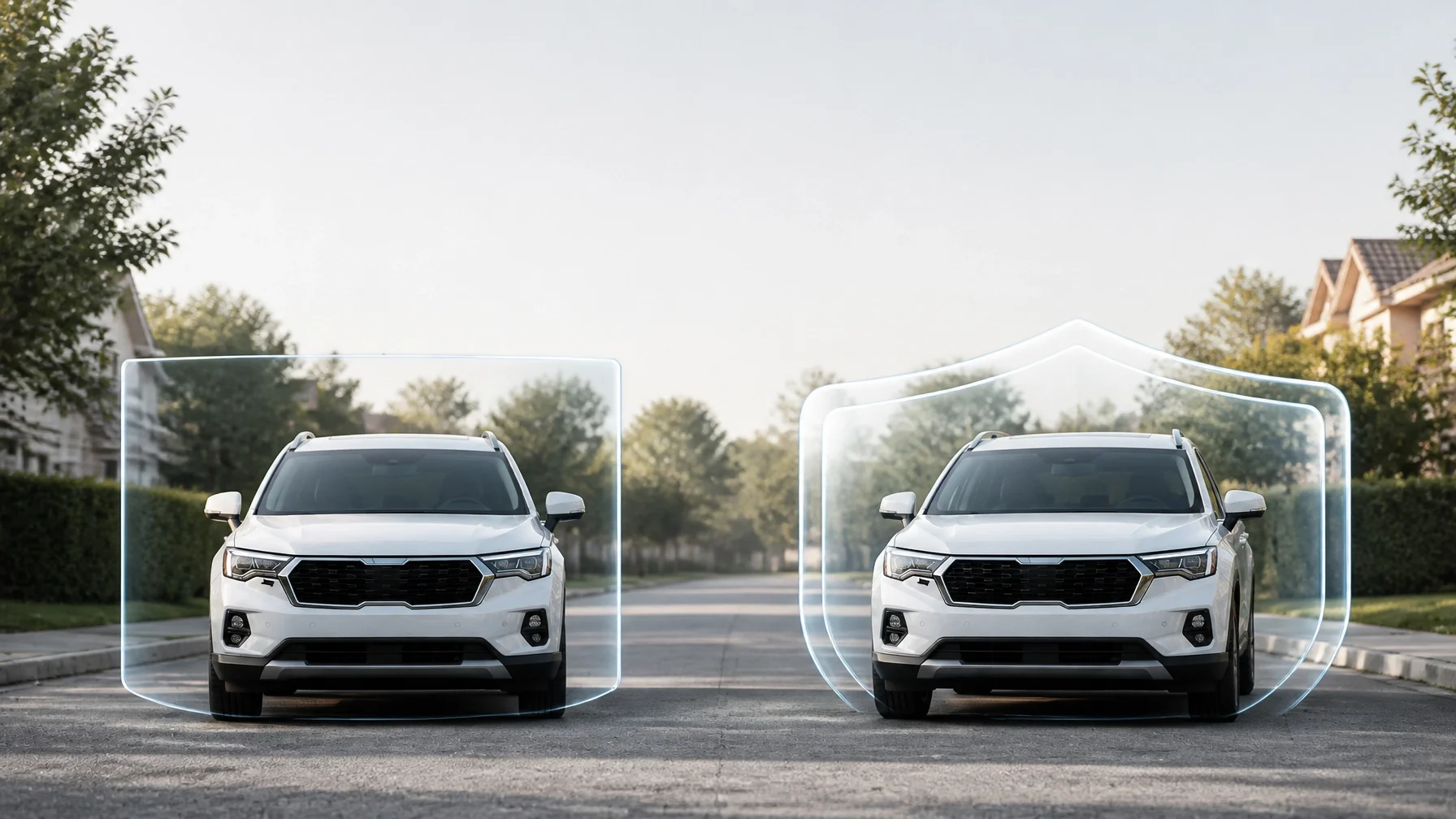
You compare two auto insurance quotes. They appear to offer the same policy. They cover the same vehicle. They even use familiar terms such as liability, comprehensive, and collision.
Yet one policy may protect you far better than the other.
That is the gap between price and protection.
A lower premium can look attractive today. But if it comes with lower liability limits, missing uninsured motorist coverage, or limited claim benefits, it may leave you exposed after a serious crash.
At Shady Oak Insurance Agency, we believe you deserve to compare more than price. You deserve to compare the protection behind the price.
The Policy Name Does Not Tell the Whole Story
Insurance companies often use similar names for their auto products. You may see “standard auto,” “preferred auto,” or “full coverage” on different quotes.
Those labels are not enough.
Two drivers can have policies that look similar while carrying very different:
Bodily injury liability limits
Property damage liability limits
Uninsured and underinsured motorist coverage
Collision and comprehensive deductibles
Rental reimbursement limits
Roadside assistance benefits
Glass coverage options
Medical payments or personal injury protection
Endorsements and exclusions
What does that mean for you?
It means a $100 monthly policy and a $140 monthly policy may not be competing on equal terms. The more expensive policy may include significantly stronger protection.
The solution is simple: compare coverage line by line before you compare premiums.
Why Insurers Charge Different Prices
Every insurance company uses its own rating model. This model estimates the likelihood and potential cost of a claim.
The details vary by company. The weight each company gives those details also varies.
Your premium may be influenced by:
✔ Driving record: Tickets, accidents, claims, and violations can affect your rate.
✔ Credit-based insurance information: Where permitted by state law, insurers may use credit-related information as one factor in assessing risk.
✔ ZIP code: Traffic patterns, weather, theft rates, repair costs, and claim frequency can vary by location.
✔ Vehicle type: A luxury vehicle, electric vehicle, sports car, family SUV, and older sedan may have very different repair and replacement costs.
✔ Age and experience: Younger drivers and newer drivers generally receive different pricing than experienced drivers.
✔ Annual mileage: More time on the road can mean more opportunities for a claim.
✔ Vehicle usage: Commuting, personal use, business use, and rideshare activity may affect eligibility and price.
✔ Selected coverage: Higher limits and more optional coverage usually cost more.
Each insurer weighs these factors differently. One company may offer a competitive rate for your vehicle and driving history. Another may view the same risk differently.
That is why quotes can vary so widely.
But the price difference is only part of the story. The real question is this:
Are the quotes built with the same coverage?
The Coverage Gaps That Matter Most
1. Bodily Injury Liability Limits
Bodily injury liability coverage helps protect you if you cause an accident that injures someone else.
A limit shown as 50/100 generally means:
Up to $50,000 for one injured person
Up to $100,000 for all injured people in one accident
A different quote may show 100/300 or 250/500.
All three policies include bodily injury liability. They do not provide the same protection.
Medical treatment, rehabilitation, lost wages, and legal expenses can add up quickly. State minimum limits may satisfy the law, but they may not adequately protect your savings, home equity, or future income.
✔ Review your limits.
✔ Consider your assets and income.
✔ Ask whether your liability protection works with your umbrella policy.
2. Uninsured and Underinsured Motorist Coverage
What happens if another driver causes your injuries but carries no insurance?
What if that driver has only the legal minimum, and your medical bills exceed it?
Uninsured motorist and underinsured motorist coverage may help protect you and your passengers in those situations. The exact rules vary by state and policy, but the purpose is important: protecting you when the at-fault driver cannot pay.
One driver may carry strong UM/UIM limits. Another may have low limits or no optional protection.
That difference may not be obvious from the monthly premium.
3. Comprehensive and Collision Coverage
People often call a policy “full coverage” when it includes comprehensive and collision. But that phrase has no universal definition.
Collision coverage generally helps pay for damage to your vehicle after a collision, subject to your deductible.
Comprehensive coverage generally addresses non-collision losses such as:
Theft
Vandalism
Hail
Falling objects
Fire
Animal strikes
Two policies may include both coverages but use different deductibles. A $250 deductible and a $1,500 deductible create very different out-of-pocket costs after a claim.
Your vehicle’s age and value also matter. If you finance or lease your vehicle, your lender may require certain coverage. That requirement still does not tell you whether your deductible or optional benefits fit your budget.
4. Rental Reimbursement
Your vehicle may be in the shop for days or weeks after an accident.
Rental reimbursement coverage can help pay for a temporary replacement vehicle. But the benefit may have daily and total limits, such as a set dollar amount per day up to a maximum number of days.
One policy may provide enough for a basic rental. Another may not include rental coverage at all.
Ask:
✔ How much is available per day?
✔ What is the maximum benefit?
✔ Does the coverage apply after every covered loss?
✔ Is the limit enough for your household’s transportation needs?
5. Roadside Assistance
Roadside assistance may help with services such as towing, jump-starts, lockouts, flat tires, and fuel delivery.
The details vary. Some plans limit the number of service calls. Others limit the distance of a covered tow.
A policy that includes roadside assistance may still provide a very different benefit than another policy with the same label.
6. Glass Coverage
A cracked windshield is common. Replacing advanced glass can also be expensive, especially when cameras and sensors require recalibration.
Glass coverage may be subject to a comprehensive deductible. Some insurers offer special glass options or separate deductibles.
Do not assume every policy handles windshield damage the same way. Ask how glass claims work before you need to file one.
7. Medical Payments Coverage
Medical payments coverage may help pay medical expenses for you and your passengers after an accident, regardless of fault, subject to policy terms and limits.
It is not a substitute for health insurance. It can still provide useful first-dollar protection for deductibles, copayments, or immediate treatment.
One quote may include medical payments coverage. Another may exclude it or provide a much lower limit.
How to Read Your Declarations Page
Your declarations page, often called the “dec page,” summarizes the key terms of your policy.
It is the best place to begin a real comparison.
Look for these sections:
Liability Limits
Find the bodily injury and property damage limits. Write down the numbers.
Do not compare a $25,000 bodily injury limit to a $250,000 limit as if they are equivalent.
Uninsured and Underinsured Motorist Limits
Confirm whether UM and UIM coverage is included. Then compare the limits to your liability coverage.
Comprehensive and Collision Deductibles
Check each deductible separately. They may not be the same.
A lower deductible usually means a higher premium. A higher deductible usually means more out-of-pocket cost after a claim.
Optional Coverage
Look for rental reimbursement, roadside assistance, medical payments, glass options, loan or lease gap coverage, and special equipment coverage.
Listed Drivers and Vehicles
Make sure every household driver and vehicle is listed correctly. Incorrect information can create problems when you need coverage.
Endorsements and Exclusions
Endorsements modify the standard policy. Exclusions limit or remove coverage in certain situations.
If you use your vehicle for business, delivery work, or rideshare driving, ask whether your policy addresses that use. Personal auto insurance may not automatically cover every type of work-related driving.
Compare Apples to Apples
Price comparison only works when the coverage is comparable.
Before requesting multiple quotes, create a coverage worksheet. Use the same information for every insurer.
Compare:
✔ The same liability limits
✔ The same UM/UIM limits
✔ The same comprehensive deductible
✔ The same collision deductible
✔ The same rental reimbursement limits
✔ The same roadside assistance options
✔ The same medical payments limits
✔ The same drivers, vehicles, mileage, and usage
Then compare the premium.
This approach helps you identify real value. It also shows whether a lower quote is truly less expensive or simply provides less protection.
For more personal insurance guidance, review The 4 Pillars of Personal Insurance. You can also learn how driver behavior and insurer technology may affect pricing in Safe Driver Apps: The Privacy vs. Discount Debate.
Why an Independent Agent Helps
You should not have to decode every insurer’s rating model alone.
An independent agency can compare options from multiple carriers. That creates a broader view of both price and protection.
At Shady Oak Insurance Agency, we look beyond the premium. We help you:
✔ Identify coverage gaps
✔ Match limits to your assets and lifestyle
✔ Compare deductibles and optional benefits
✔ Review how each carrier handles your specific risk
✔ Find competitive rates without stripping away essential protection
You have already worked hard to build your life. Your auto policy should protect what you have built.
Protect What You've Built
The lowest price is not always the best value.
A cheap policy may save you money each month. It may also leave you responsible for costs that exceed your limits after a serious accident.
The right policy gives you more than an insurance card. It gives you meaningful protection when your vehicle, finances, health, and future are at risk.
Do not compare auto insurance by price alone. Compare the protection behind the price.
Call Shady Oak Insurance Agency at 612-361-9717 for a policy comparison review. We will help you compare your current coverage with available options so you can make a confident decision about your protection.
