

Your RV, Boat, and Side-by-Side: The Liability Gap That Follows You Home
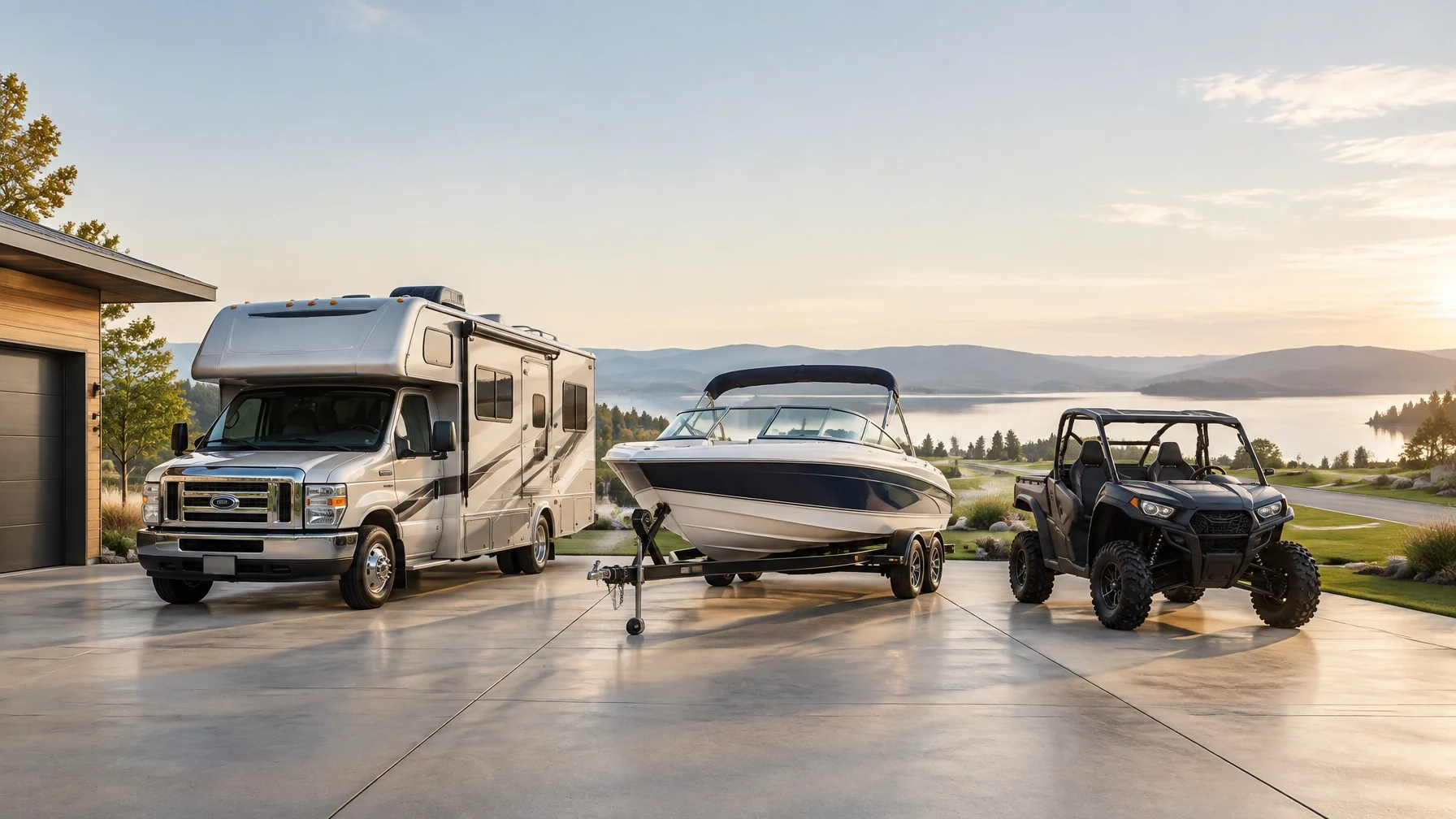
You've invested in the RV. You maintain the boat. You bought the side-by-side for weekends, trails, and time with the people you care about.
But one assumption could put your savings, home, and future income at risk:
> “It’s covered under my homeowners insurance.”
Usually, it is not.
Your homeowners policy may provide narrow protection for certain recreational vehicles while they are on your property. Once you take that vehicle to a trail, lake, campground, public road, or another person’s property, the liability coverage can disappear.
That is the gap you need to address before an accident happens.
The Assumption That Can Cost You Everything
A side-by-side collision on a trail may seem like a recreational mishap. The financial consequences can be anything but recreational.
Imagine this:
You are driving your side-by-side on a marked trail. Another rider comes around a turn. The vehicles collide. The other rider suffers serious injuries and needs emergency care, surgery, rehabilitation, and extended time away from work.
The claim reaches $400,000.
Your homeowners policy excludes liability for the side-by-side because the accident happened away from your residence premises. Your auto policy does not cover the vehicle because it is not an insured auto under that policy.
You are personally responsible for the uncovered claim.
That could mean:
Medical expenses
Lost wages
Rehabilitation costs
Property damage
Legal defense costs
A settlement or court judgment
The solution is specific liability coverage for the recreational vehicle.
Your homeowners policy was designed primarily for your home, personal property, and ordinary personal liability exposures. It was not designed to automatically follow every motorized vehicle you own wherever you take it.
What Your Homeowners Policy May Actually Cover
Homeowners coverage for recreational vehicles is often much narrower than owners expect.
Depending on the policy language, your homeowners liability coverage may apply to limited situations involving a recreational vehicle:
While the vehicle is used on your residence premises
When the vehicle meets a narrow policy definition
When the vehicle is a qualifying golf cart
When the policy includes a specific endorsement
The details vary by carrier and policy. Your declarations page and policy wording control.
What usually creates the problem is taking the vehicle somewhere else.
Your homeowners liability coverage may not apply when you use your:
ATV or side-by-side on a trail
Jet ski on a lake
Snowmobile on a public route
Golf cart around a resort or neighborhood
Boat at a marina or another body of water
RV on public roads or at a campground
You may still have some personal property coverage for the vehicle itself in limited circumstances. For example, your policy might provide restricted coverage for theft or fire.
But property coverage is not liability coverage.
If your boat is stolen, that is a property question. If your boat injures someone or damages another vessel, that is a liability question. You need to insure both exposures properly.
For a broader review of how your policies work together, see The 4 Pillars of Personal Insurance.
Boats and Personal Watercraft Create Their Own Exposure
Boats, jet skis, and other watercraft can create severe liability claims in seconds.
A collision can injure passengers, swimmers, or other boaters. A wake can damage another vessel or property at the shoreline. A jet ski accident can lead to costly medical treatment and a long legal dispute.
Homeowners policies may provide limited boat coverage. The limits and eligibility often depend on factors such as:
Boat length
Engine horsepower
Type of watercraft
Location of use
Storage arrangements
Whether the boat is a sailboat, fishing boat, jet ski, or another vessel
A dedicated boat or watercraft policy is usually the better way to address the exposure. It can be structured to provide:
Bodily injury liability
Property damage liability
Physical damage coverage for the boat
Coverage for permanently attached equipment
Wreck removal
Optional uninsured watercraft coverage
Protection that coordinates with your umbrella policy
You can review general watercraft coverage considerations through Allstate’s boat insurance information, but your own policy needs to be reviewed based on the vessel you own and how you use it.
The Umbrella Trap: Extra Limits Are Not Automatic
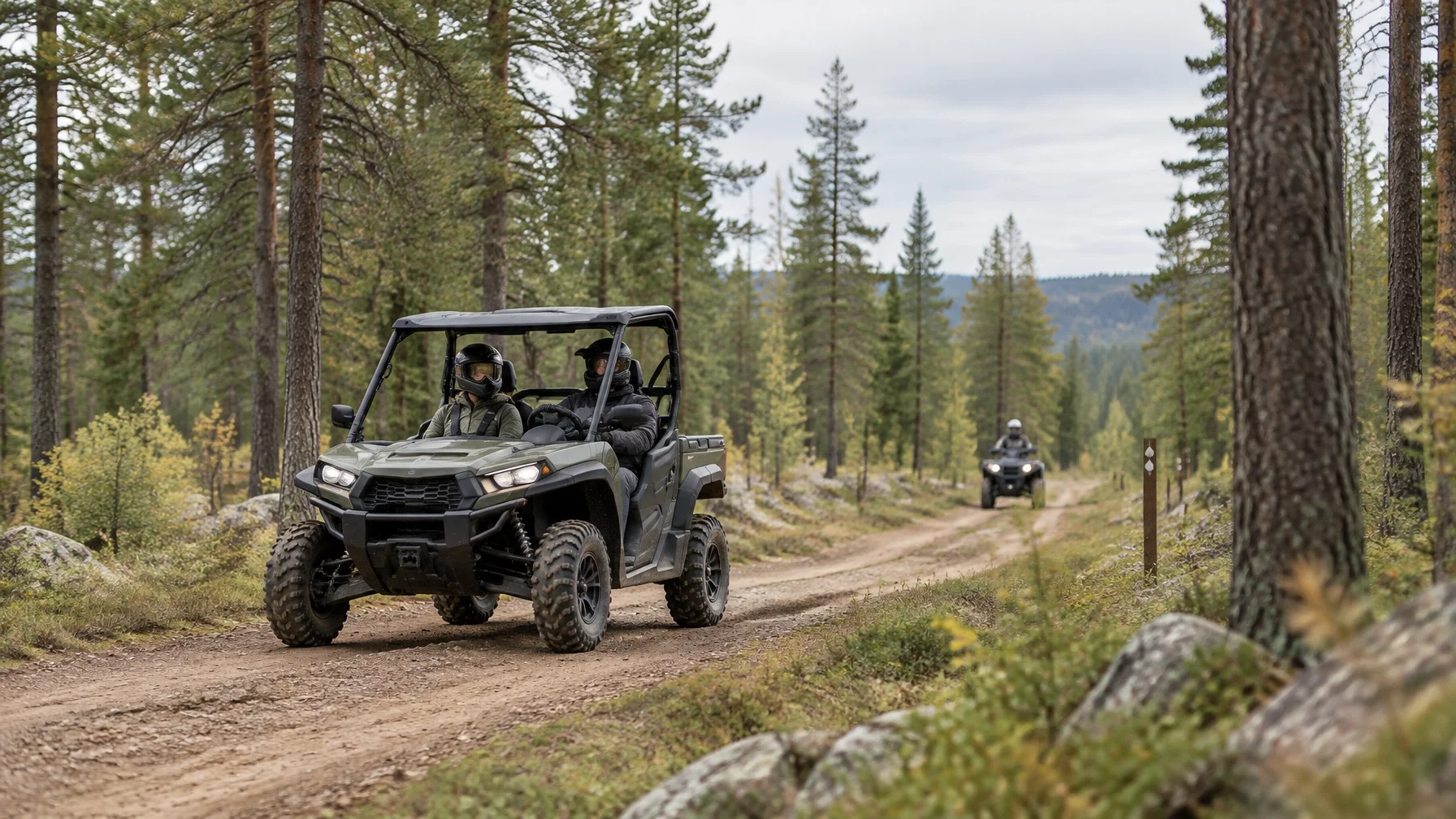
A personal umbrella policy can provide valuable protection above your homeowners, auto, boat, and recreational vehicle policies.
But an umbrella is not a magic policy that automatically covers every vehicle you own.
Two requirements matter:
1. The recreational vehicle must be scheduled
Your RV, boat, ATV, side-by-side, jet ski, snowmobile, or golf cart may need to be specifically listed or scheduled for the umbrella to recognize the exposure.
If the vehicle is not disclosed, the umbrella carrier may:
Exclude the vehicle
Decline to respond
Treat the required underlying coverage as missing
Leave you responsible for part or all of the claim
2. Your underlying liability limits must meet the requirement
Umbrella carriers require you to maintain certain liability limits on the underlying policy before the umbrella responds.
Common requirements may range from $300,000 to $500,000. Some carriers now require $500,000 to $1 million in underlying auto liability, depending on the account, vehicle, and underwriting guidelines.
Your carrier’s requirement is the number that matters.
If your recreational vehicle policy carries $100,000 of liability but your umbrella requires $300,000, you may be personally responsible for the difference. The umbrella may not simply “drop down” and fill the gap.
That is why the following three items must work together:
✔ The vehicle is properly insured
✔ The vehicle is scheduled on the umbrella
✔ The underlying liability limits meet the umbrella carrier’s requirements
Ask your agent to confirm those details in writing.
The Fix: Build Coverage Around How You Use the Vehicle
The right solution starts with an honest inventory of your recreational vehicles and how you use them.
For many owners, that means a combination of policies:
For an RV
A motorhome generally needs its own RV or auto policy with liability coverage for road use. A travel trailer may be handled differently, especially while it is being towed or parked.
Your policy should reflect whether you:
Travel occasionally
Use the RV seasonally
Live in it full-time
Tow recreational equipment
Store personal belongings inside
Rent or lend it to others
For general RV considerations, review Progressive’s RV insurance information.
For a boat or personal watercraft
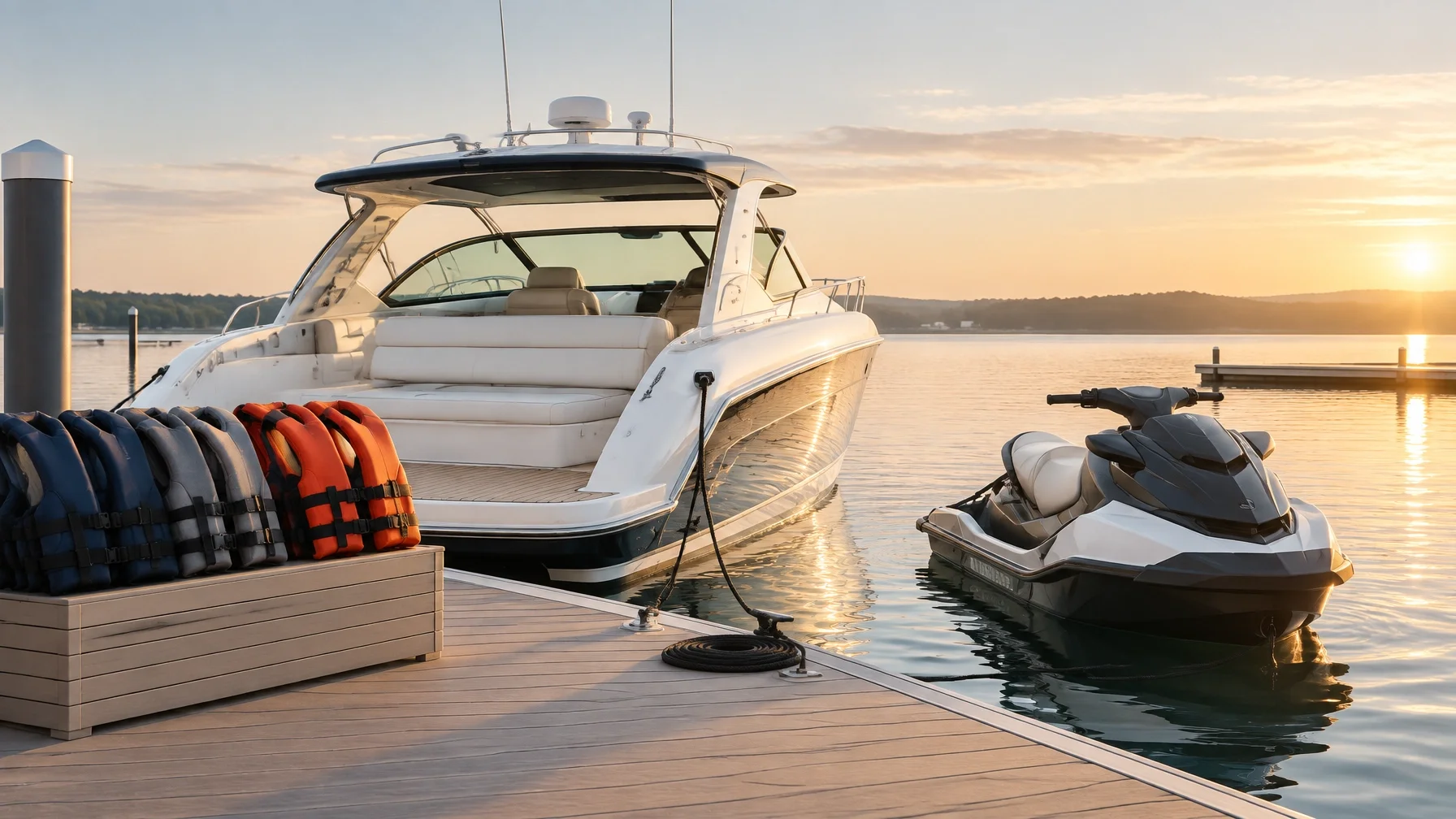
A dedicated watercraft policy can provide liability and physical damage coverage that is more appropriate than relying on limited homeowners coverage.
Be sure to disclose:
The vessel’s length and value
Engine horsepower
Where you operate it
Who operates it
Whether you tow water skiers or tubes
Whether you keep it at a marina or private dock
For an ATV, side-by-side, or snowmobile
A standalone recreational vehicle policy can address off-premises liability and physical damage coverage.
Tell your agent whether you use the vehicle for:
Trail riding
Hunting
Farm or acreage use
Transportation between properties
Racing or organized events
Carrying passengers
Plowing or other work
The use matters. The location matters. The passengers matter.
A policy that works for occasional trail use may not work for racing, commercial use, or lending the vehicle to others.
Your Recreational Vehicle Liability Checklist
Use this quick checklist before your next trip:
✔ List every RV, boat, jet ski, ATV, side-by-side, golf cart, and snowmobile you own or regularly use.
✔ Identify which vehicles are covered by a dedicated policy.
✔ Confirm which vehicles are relying only on your homeowners policy.
✔ Ask whether your liability coverage applies away from your residence premises.
✔ Confirm that your boat or personal watercraft has adequate liability coverage.
✔ Confirm that your RV has the correct auto or RV liability policy.
✔ Check your umbrella declarations for required underlying limits.
✔ Confirm that every applicable recreational vehicle is scheduled on the umbrella.
✔ Ask whether your umbrella requires $300,000, $500,000, or higher underlying limits.
✔ Review coverage before buying, selling, lending, or modifying a recreational vehicle.
✔ Revisit your coverage after moving, purchasing property, or changing how you use the vehicle.
Protect What You Take With You
Your homeowners policy protects an important part of your life. It does not automatically protect every risk that follows you away from home.
Your RV, boat, side-by-side, ATV, jet ski, snowmobile, and golf cart each create their own liability exposure. The right coverage can help protect your savings, home equity, income, and future plans when an accident leads to a serious claim.
At Shady Oak Insurance Agency, we can review your personal insurance as one complete plan. We can help coordinate your homeowners, auto, recreational vehicle, watercraft, and umbrella coverage through respected insurance carriers.
Do not wait for a claim to find the gap. Call Shady Oak Insurance Agency at 612-361-9717 for a free liability review.
Coverage details, exclusions, and required underlying limits vary by insurance carrier and policy. This article is general information and is not a substitute for reviewing your actual policy documents with a licensed insurance professional.
